NBA Line Movement: Reading Sharp Money and Reverse Line Moves
 Available in US
Three seasons ago, I noticed something odd about a Wednesday night Nuggets-Pelicans game. Denver opened as a 6.5-point favourite on every UK platform I checked. By tip-off, the line had moved to Denver -5, despite roughly 70% of public bets backing Denver. The money was flowing one way; the line moved the other. That was my introduction to reverse line movement — the single most reliable signal that professional bettors are active in a market.
Understanding line movement transforms basketball betting from guesswork into a structured analytical process. The odds you see when a market opens are not the same odds you see an hour before tip-off, and the reasons for the shift tell you more about where value sits than any stat sheet. In a UK online market that processes around 290 million bets monthly across all platforms, the lines on NBA games are shaped by a complex negotiation between recreational money and sharp money — and learning to read that negotiation is one of the most underrated skills in basketball wagering.
Why NBA Lines Move Between Opening and Tip-Off
I used to assume bookmakers moved lines in response to new information — injury reports, late scratches, travel delays. That happens, but it accounts for a minority of pre-game line movement. The majority is driven by money flow. When a disproportionate amount is wagered on one side of a market, the bookmaker adjusts the line to balance their exposure and attract action on the other side.
Think of it like a seesaw. If eighty per cent of the money lands on the Celtics -7.5, the bookmaker nudges the line to -8 or -8.5 to make the other side — the underdog at +8 or +8.5 — more attractive. This process happens continuously from the moment the market opens until game time, and the total movement across that window tells a story about where different types of bettors are putting their capital.
NBA lines typically open twelve to eighteen hours before tip-off at UK platforms, though some operators post early lines a day or more in advance. The first few hours of trading attract sharp bettors — professionals who wager large amounts based on proprietary models and move the line before the recreational public enters the market. The final two to three hours before tip-off see the heaviest recreational action, often pushing the line in the opposite direction from the earlier sharp movement. Reading that sequence is the key to extracting signal from the noise.
Reverse Line Movement: When the Market Contradicts the Public
Have you ever wondered why a team receiving 75% of spread bets still sees their line move against them? That is reverse line movement, and it occurs because the bookmaker weights dollars more heavily than bet count. A hundred casual punters placing ten-pound bets on the favourite generate a thousand pounds of exposure. A single sharp bettor placing five thousand pounds on the underdog generates five times that. The bookmaker moves the line to manage the larger risk, even though the majority of individual bets point the other way.
In my tracking over three NBA seasons, games with confirmed reverse line movement on the spread have covered at a rate of approximately 54-56%, compared to the roughly 50% baseline you would expect. That is a meaningful edge — not a guaranteed winner, but a persistent statistical tendency that, combined with your own analysis, shifts the probability in your favour.
Identifying reverse line movement requires two data points: the percentage of bets on each side (available from several free tracking sites) and the direction the line has moved since opening. When the majority of bets favour one side and the line moves toward the other, professional money is active. The signal is strongest when the movement exceeds one point on the spread or 1.5 points on the total — smaller movements can be noise from routine balancing.
Steam Moves and How They Cascade Across Platforms
The global sports betting market hit $124.88 billion in 2026, and that scale means line movements at one major operator cascade rapidly across the entire market. A “steam move” occurs when multiple sharp bettors simultaneously hit the same side at different sportsbooks, triggering a coordinated shift that moves the line across the industry within minutes.
I first experienced a steam move in real time during a 2023 playoff game. At 22:15 UK time, the Suns were +3.5 across every platform I had open. By 22:18 — three minutes later — they were +2.5 on two platforms and +3 on the others. No injury news had broken. No lineup change had been announced. Sharp syndicates had identified value on Phoenix and hit the market simultaneously. By the time I checked the last of my four platforms, the move was complete.
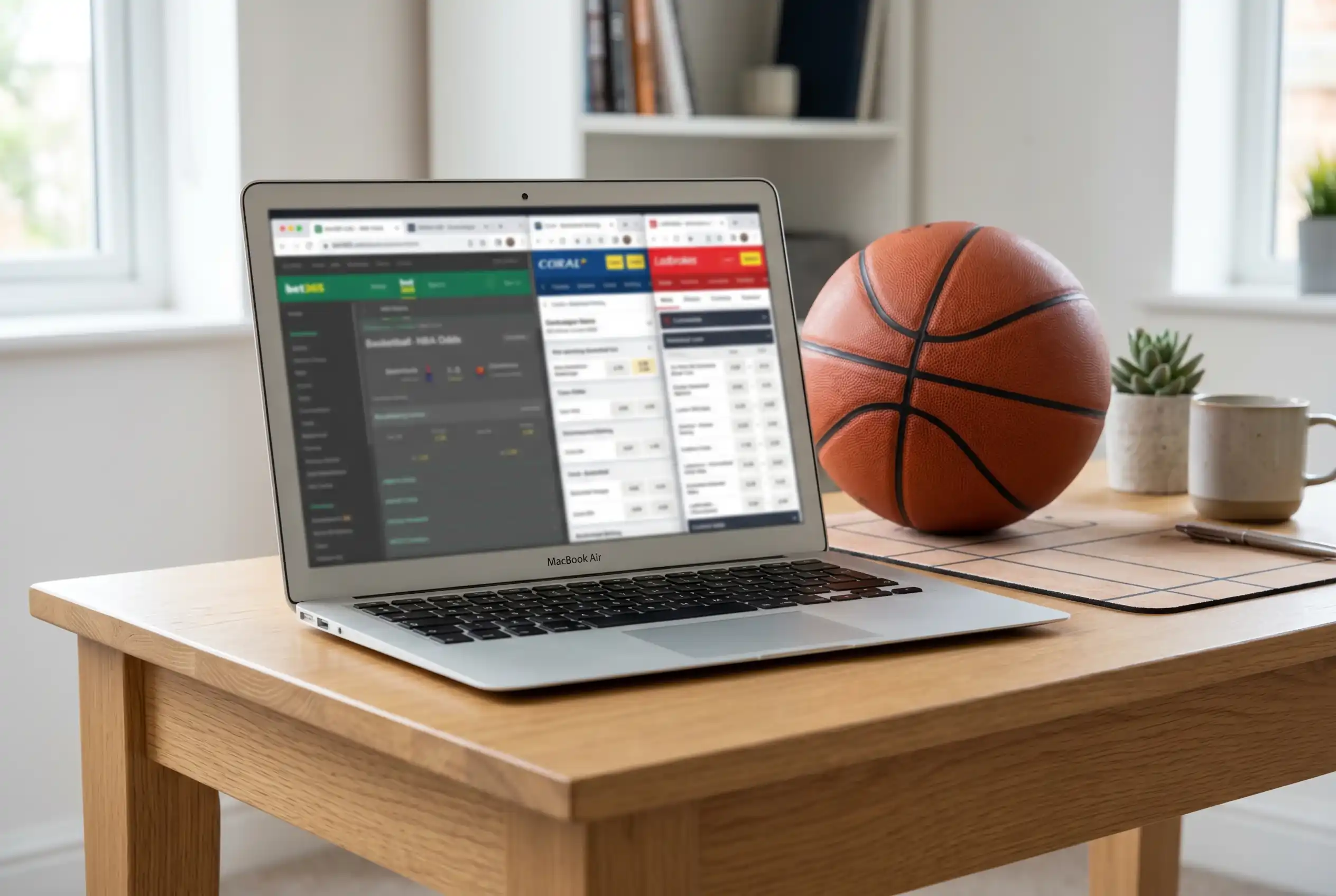
For UK bettors, the practical lesson is that steam moves reward speed. If you are monitoring line movements in real time and you see a sudden shift without an obvious news catalyst, the remaining platforms that have not yet adjusted represent a brief value window. That window closes within minutes, sometimes seconds. If you are not watching live, the move has already passed by the time you check the odds. This is why I keep multiple operator apps open on my phone during the pre-game window for NBA games I am targeting, particularly during the late US afternoon when sharp money is most active.
Tracking Line Movement With Free Tools
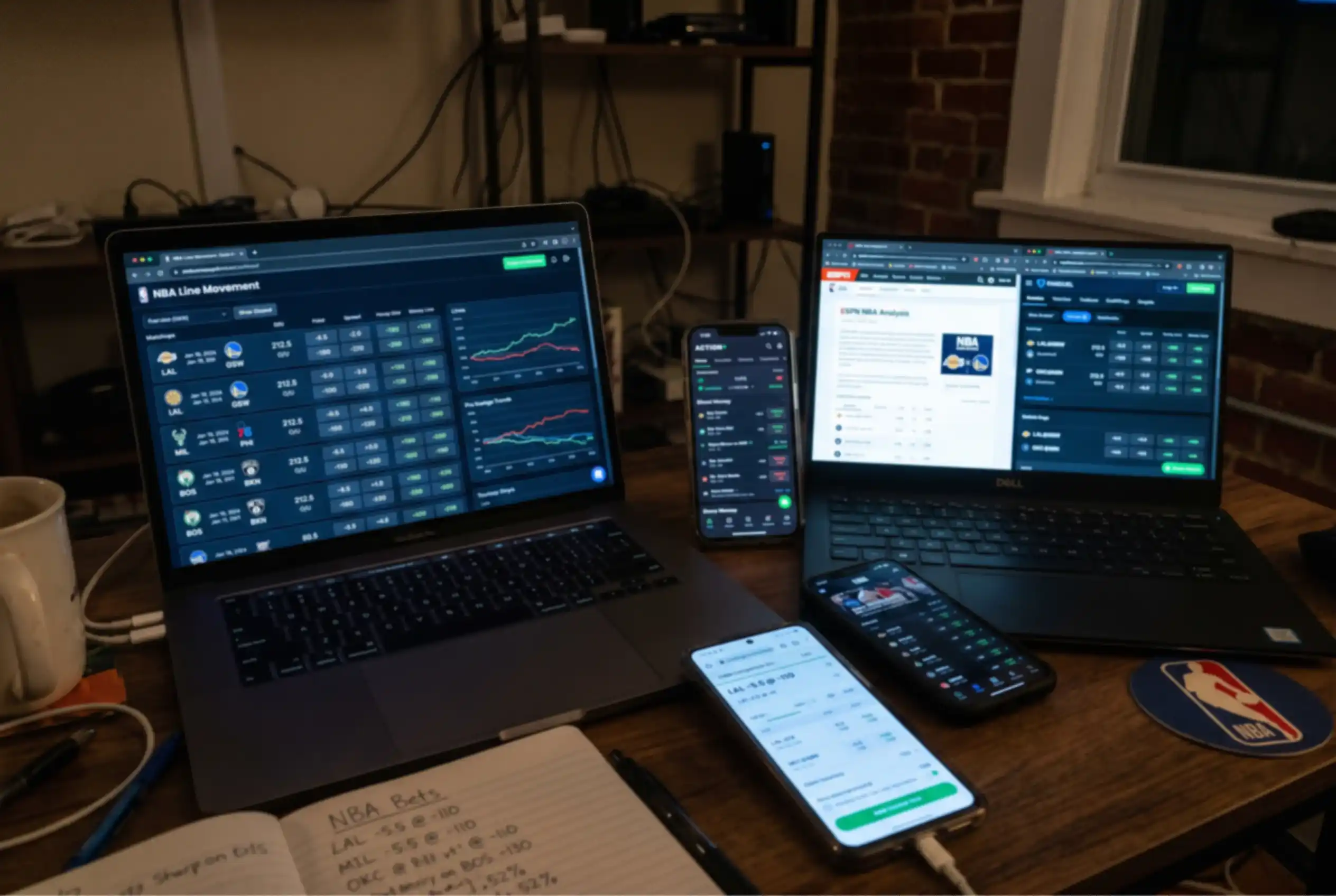
You do not need an expensive subscription to monitor NBA line movement. Several free websites track opening and current lines across major operators, displaying the movement graphically alongside bet percentage data. The information is typically delayed by a few minutes rather than real-time, which means you will not catch steam moves as they happen, but you will identify broader sharp-versus-public divergences that play out over hours.
The metrics I track before every NBA bet are: opening line, current line, direction of movement, percentage of bets on each side, and any injury or news catalysts that explain the movement. If the movement is fully explained by news — a star player ruled out, a starting lineup change — the line shift is informational, not predictive. If the movement has no visible news catalyst and contradicts the public betting percentage, it is likely sharp-driven, and that signal carries weight in my decision.
One caution: bet percentage data from free sites is approximate, not exact. Different sites sample different operators and may show conflicting numbers. Use the directional signal — which side has the majority — rather than fixating on precise percentages. If three sites all show 65-70% of bets on the favourite and the line has moved toward the underdog, the reverse line movement signal is robust regardless of the exact percentage. The odds mechanics guide covers how implied probability and overrounds interact with the line movement patterns described here.
When to Follow Sharp Money and When to Fade It
Sharp bettors are not infallible. They operate at a roughly 54-57% win rate on spreads — profitable over volume, but far from a guarantee on any individual game. Following every reverse line movement blindly produces a modest edge, but the real value comes from combining the sharp signal with your own independent analysis.
I follow sharp money most aggressively in three scenarios. First, when reverse line movement aligns with my pre-game model output — I already had the underdog as the correct side, and the sharp money confirms my thesis. Second, when the movement occurs early in the trading window (more than four hours before tip-off), which typically indicates the highest-confidence sharp plays. Third, when the line crosses a key number. In NBA spreads, certain numbers are more significant than others — 3, 5, 7, and 10 are common margins of victory, and a line moving through these numbers signals particularly strong conviction.
I fade sharp money — betting against the professional move — only when I have a specific, data-backed reason to believe the sharp side is wrong. This is rare, because the sharpest bettors have access to proprietary models, real-time injury intelligence, and years of experience that most recreational bettors lack. Fading sharp money as a default strategy is a recipe for losing, and I would not recommend it to anyone who does not have a genuine informational or analytical edge in a specific game context.
What is reverse line movement in NBA betting?
Reverse line movement occurs when the betting line moves in the opposite direction from where the majority of individual bets are placed. For example, if 70% of bets back team A on the spread but the line moves in favour of team B, it indicates that sharp (professional) bettors have placed large wagers on team B, outweighing the public money on team A.
How quickly do NBA betting lines move at UK bookmakers?
Standard line movement happens gradually over hours as money flows in. Steam moves — triggered by coordinated sharp betting — can shift lines by one to two points across multiple platforms within two to five minutes. UK platforms adjust slightly behind US-facing operators due to the transatlantic data flow.
Prepared by the Basketball Betting Markets editorial staff.