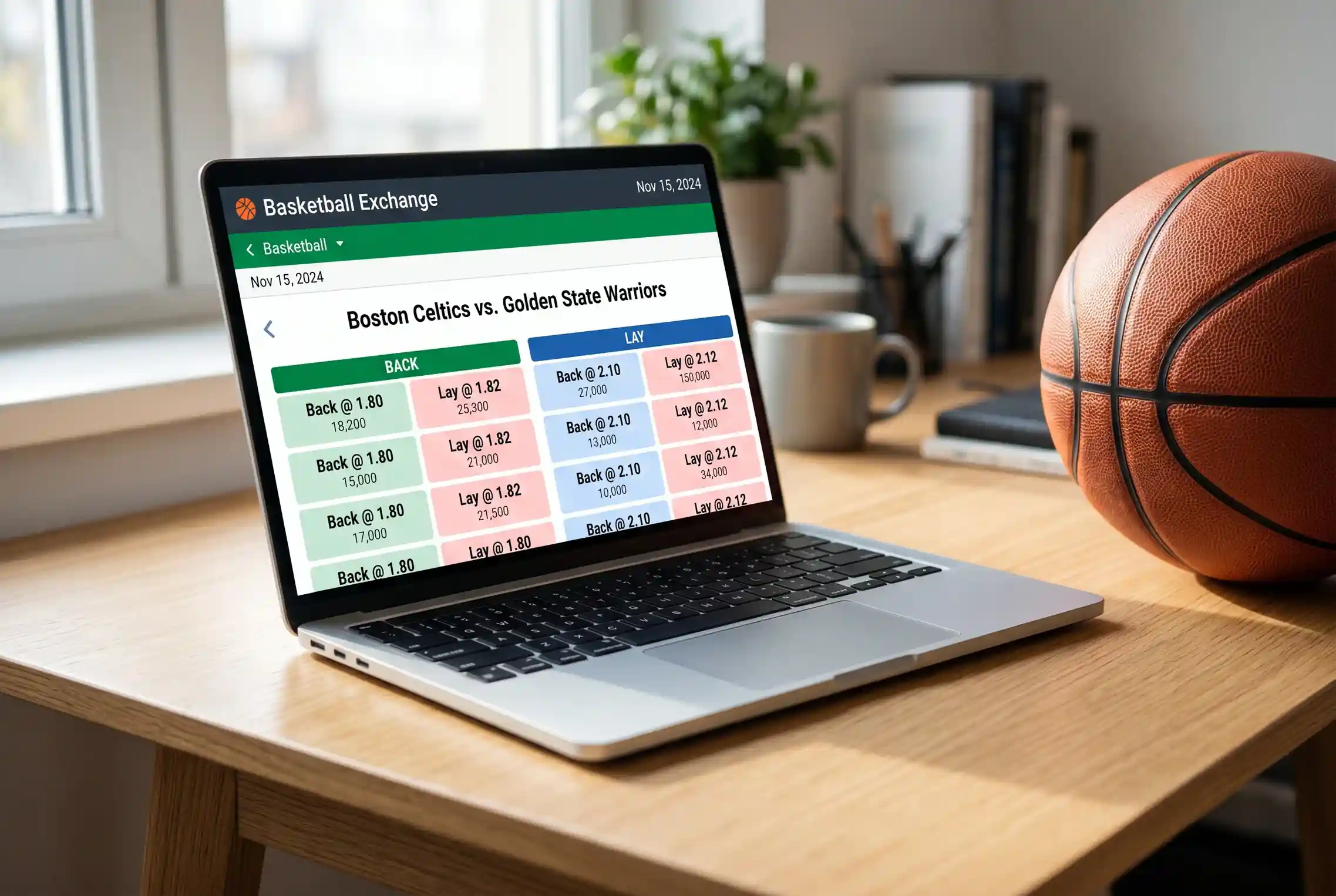
Basketball Same Game Parlay Strategy
 Available in US
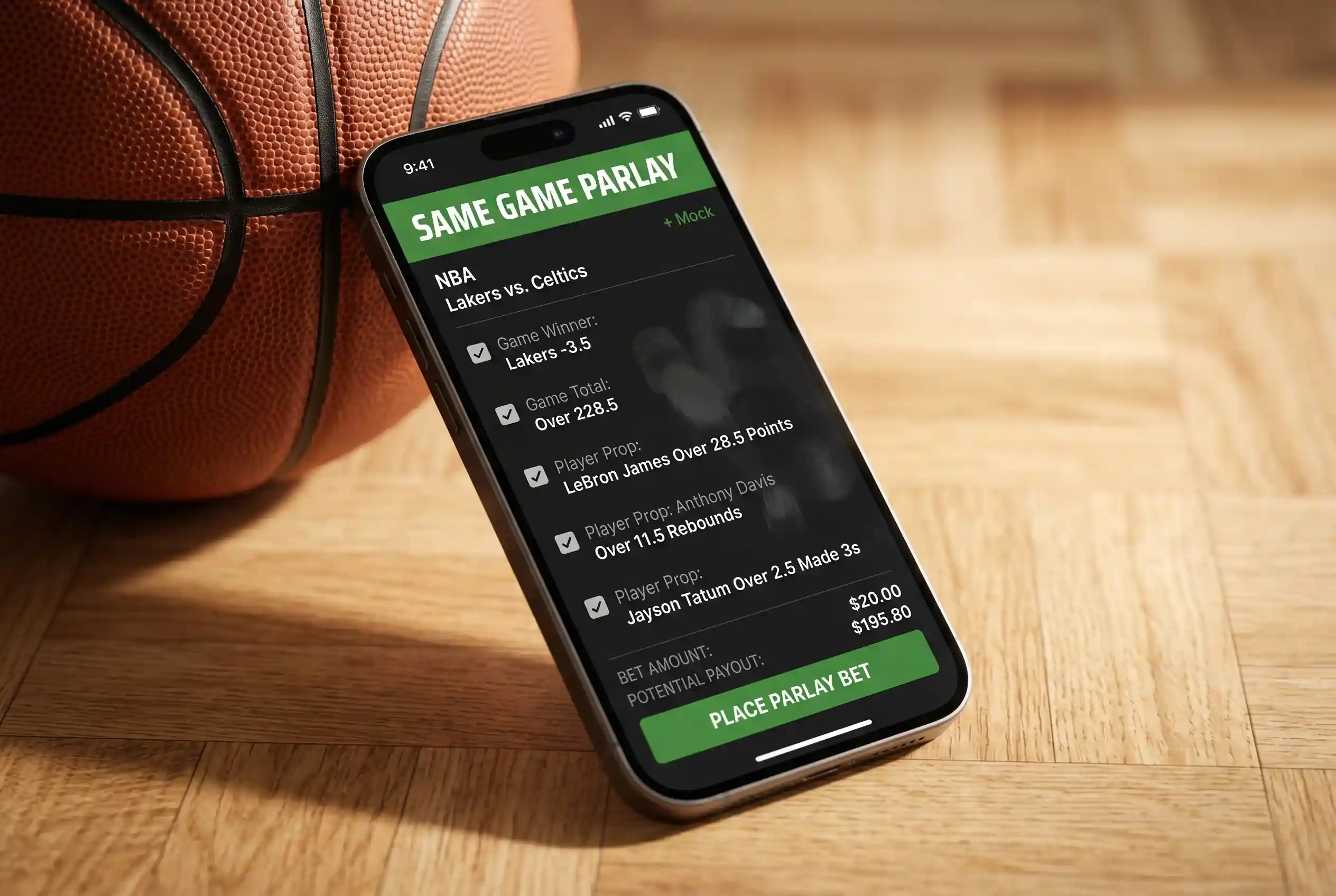
Same-game parlays have become one of the key drivers of revenue growth for operators across North America, and that wave has now reached UK platforms with full force. I remember when combining selections from the same match required an exchange account and some creative thinking. Now, every major UK bookmaker offers a bet builder for NBA games, and the product is marketed with a slickness that deserves a hard analytical look underneath. If you prefer mixing selections from different games, our basketball accumulator tips will help you avoid common correlation mistakes.
An SGP lets you combine multiple outcomes from a single basketball game into one bet — say, the Celtics to win, the total to go over 218.5, and Jayson Tatum to score over 27.5 points. The appeal is obvious: three separate convictions about the same game, rolled into one bet at combined odds. The mechanics, however, are more complicated than a standard accumulator, and the bookmaker’s margin on an SGP is typically larger than you would pay placing each leg as a single.
How Same-Game Parlays Differ From Standard Sports Accumulators
In a traditional accumulator, your selections come from different games. Each outcome is statistically independent — the Celtics beating the Lakers has no causal relationship with the Nuggets beating the Suns. Because the legs are independent, the bookmaker simply multiplies the individual odds together to calculate the combined price.
SGPs break that independence. Selections from the same game are correlated. If you back the over on the game total, the probability that a high-scoring player exceeds his points line increases — because a high-scoring game by definition means someone is scoring a lot. The bookmaker cannot just multiply the individual odds together; they need a correlation model that adjusts the combined price to account for the relationship between legs.
That correlation model is the operator’s proprietary advantage, and it is where the margin hides. Different bookmakers use different models, which means the same three-leg SGP can be priced at 5.00 on one platform and 4.20 on another. The variation is much wider than you see on standard accumulators, and shopping across platforms matters more for SGPs than for almost any other bet type. DraftKings and FanDuel — the two official NBA betting partners that control roughly 75% of regulated handle in the US — pioneered the SGP product, but UK operators have developed their own correlation engines that produce materially different prices.
Correlation Between Legs: the Hidden Cost
I spent a month last season tracking the implied margin on SGPs across four UK platforms. The average margin on a three-leg SGP was between 18% and 24%, compared to roughly 10-12% for a three-leg standard accumulator using the same types of selections from different games. That gap is the cost of correlation adjustment, and the bookmaker keeps every penny of it.
Here is how it works in practice. Suppose you want to combine: team A to win, the game total over 220.5, and player X over 25.5 points. As singles, these might be priced at 1.55, 1.90, and 1.80 respectively. Multiply those together: 5.301. But the SGP price offered is 4.20. The difference — 5.301 minus 4.20 = 1.101 in decimal terms — represents the correlation discount plus the operator’s additional margin. You are paying roughly 20% more for the privilege of combining them in a single bet.
Not all correlations work against you. Negative correlations exist too. If you back the under on the game total and a player to score over his points line, those legs work against each other — a low-scoring game makes it harder for any individual player to pile up points. Some bookmakers underadjust for negative correlations, meaning the SGP price is more generous than it should be. Finding those mispriced negatively-correlated SGPs is where the genuine edges live, though it requires more analysis than most recreational bettors are willing to do.
Why Operators Love SGPs: Margin Analysis
Same-game parlays generate disproportionately high margins for operators precisely because the correlation model is opaque. In a standard moneyline market, you can easily compare odds across ten bookmakers and know the fair price within a few percentage points. In an SGP, the correlation adjustment is invisible to the customer, and even experienced bettors struggle to reverse-engineer the true combined probability.
Operators promote SGPs aggressively because the product combines high margin with high engagement. A punter who builds a five-leg SGP watches every minute of the game, checks every stat update, and — when the bet loses — often builds another one the next night. The feedback loop is powerful, and it is no accident that SGP prompts appear on the home screen of almost every UK betting app before tip-off.
This is not an argument against ever placing an SGP. It is an argument for understanding what you are buying. If the entertainment value of watching a game with five correlated bets running is worth the extra margin to you, that is a legitimate choice. But if you are treating SGPs as a strategy for long-term profit, you need to be realistic about the structural headwinds.
Building an Informed Basketball SGP
When I build an SGP — which is rarely, perhaps once or twice a week during the NBA season — I follow a rigid process. First, I identify a game where I have a strong full-game opinion: a moneyline or totals position that I would take as a single. That becomes the foundation leg. Second, I add one or two player prop legs that logically connect to my game thesis but are not redundantly correlated.
Example: if my thesis is that the Timberwolves will win a low-scoring, defensive game, my foundation is the under on the total. My second leg might be Anthony Edwards under 26.5 points — not because I think Edwards will play poorly, but because a genuine defensive slug-fest depresses everyone’s scoring, including the best player on the winning team. My third leg could be the Timberwolves first-half spread, since defensive teams often impose their style early. Each leg flows from the same thesis, and the correlations are either neutral or in my favour.
What I never do: add a leg purely because it “feels right” or because the combined price reaches an attractive number. The moment you are building an SGP backward from the payout rather than forward from the analysis, you have lost the discipline that makes player props and game-level markets profitable in isolation. Compare the latest odds across licensed bookmakers directly on the premier basketball betting platform in the UK.
One final rule: I stake SGPs at half my normal unit size. The variance is higher, the margin is higher, and the temptation to increase stakes after a near-miss is stronger. Half-sizing keeps the bet meaningful enough to care about but small enough to survive a cold streak without damaging the bankroll.
Do same-game parlays offer worse odds than separate single bets?
Yes. The combined SGP price is almost always lower than the product of each leg’s individual odds, because the bookmaker applies a correlation adjustment and additional margin. The gap typically ranges from 15% to 25% depending on the platform and the number of legs.
Can I combine player props with game totals in a basketball SGP?
Yes, and this is one of the most common SGP structures. However, player scoring props and game totals are positively correlated — a high-scoring game makes it easier for individual players to exceed their lines — so the bookmaker discounts the combined price accordingly.
Written by the editors at Basketball Betting Markets.