Basketball Betting Demographics UK: Who Bets and How 2026
 Available in US

For years, the default image of a UK sports bettor was a middle-aged man in a bookmaker’s shop on a Saturday afternoon, filling in a football coupon. That image was always a caricature, but the data now shows it is increasingly outdated — particularly for basketball, which attracts a younger, more digitally engaged, and more analytically oriented audience than any other major betting sport in the UK.
Understanding who bets on basketball — and how they do it — is not just market research. It tells you who you are competing against in the betting market, what types of bets they favour, and where their blind spots might create opportunities for a more disciplined approach.
Age Profile: 25-34 Leads, 18-24 Grows Fastest
The 25-34 age group makes up 34.1% of the global online betting customer base — the single largest demographic segment. These are people who came of age during the explosion of NBA social media content, grew up watching highlights on their phones, and entered the betting market already familiar with the sport. In the US, that familiarity translates directly into handle; in the UK, the effect is similar but filtered through a culture where football remains dominant.
The 18-24 segment is the fastest-growing, expanding at a CAGR of nearly 12% globally. This group is the first generation of truly mobile-native bettors. They do not remember a time before betting apps, do not associate gambling with physical shops, and are significantly more likely to engage with prop bets, same-game parlays, and in-play markets than older demographics. For basketball specifically, their engagement is disproportionately high relative to their engagement with horse racing or football — sports that carry cultural weight with older UK audiences but less resonance with Gen Z.
The gender split globally shows men generating roughly 69% of online gambling revenue, with the female audience growing faster at a CAGR over 10%. In basketball betting specifically, the male skew is even more pronounced, reflecting the sport’s traditional male audience base in the UK. That is changing slowly — women’s basketball has grown its media profile significantly, and betting coverage of the WNBA is expanding at UK platforms — but the current reality is that basketball betting in the UK remains overwhelmingly male-driven.
Gender and Basketball Betting in the UK
UK-specific data shows that 15% of men versus 4% of women participate in sports betting. The gap narrows in the younger demographics — 18-24 women are more likely to have placed a sports bet than women over 45 — but it remains substantial. For basketball, the gender gap is likely wider still, given that NBA viewership in the UK skews heavily male.
This is not a static picture, though. The growth in women’s sports betting globally, combined with increased media coverage of the WNBA and women’s EuroLeague, is gradually expanding the female basketball betting audience. Operators have begun to respond with targeted market coverage for women’s basketball, though it remains a fraction of the NBA offering. The progression mirrors what happened in women’s football betting five to seven years ago — limited coverage initially, followed by expansion as demand data accumulated.
Mobile-First, Home-Based: How UK Punters Access Basketball Markets
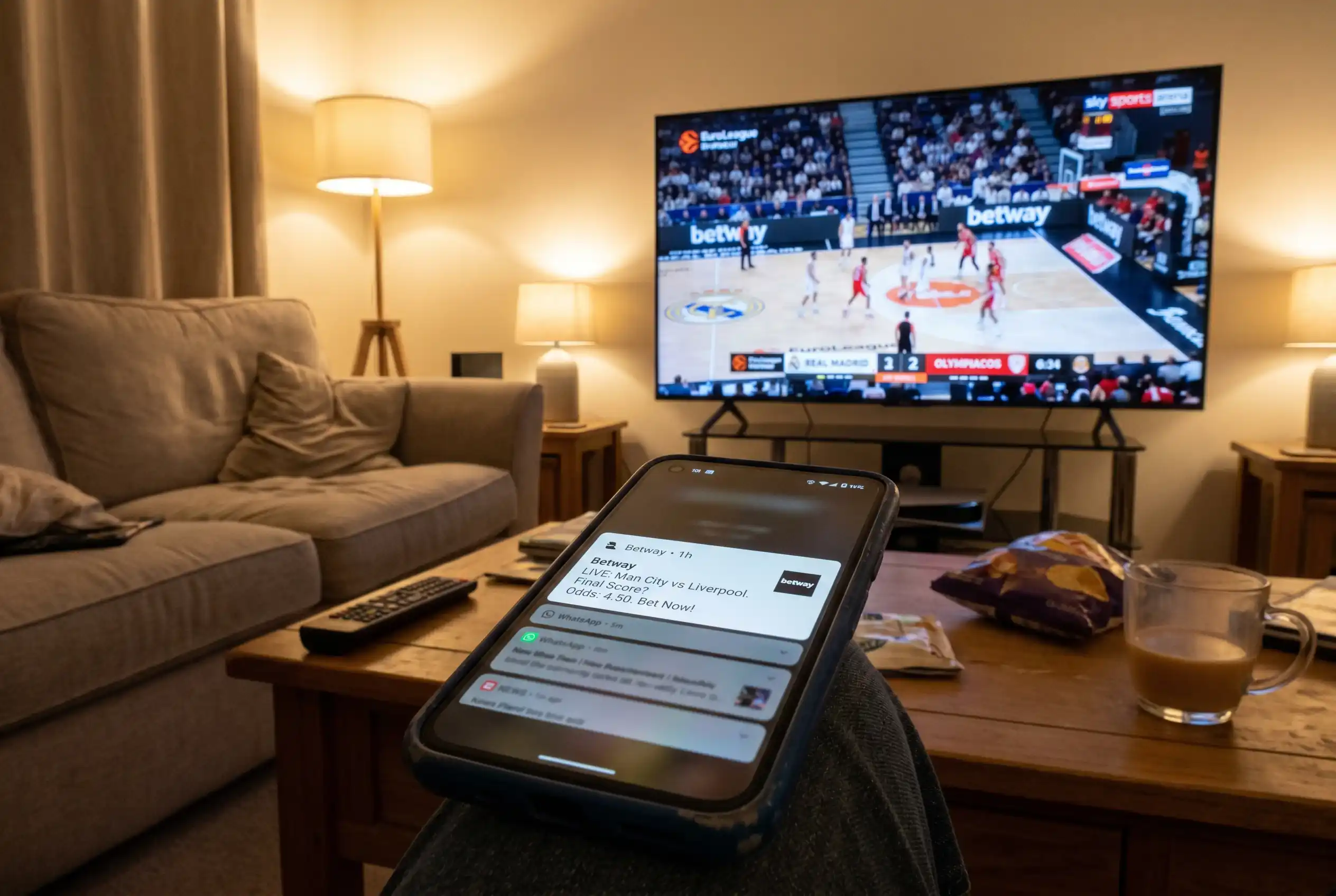
Around 80% of online gamblers used smartphones for betting in 2025, and for basketball the figure is almost certainly higher. NBA games tip off late in the UK — typically between 23:00 and 03:00 — which means the overwhelming majority of basketball bets are placed from home, on a phone, while watching a stream or tracker. The data confirms this: 95% of UK online gambling activity occurs from the home.
That mobile-first, home-based pattern has implications for how you bet. The screen is small, the interface encourages quick decisions, and the temptation to add another leg to a same-game parlay is literally one thumb-tap away. Operators design their apps to minimise friction between intention and action, which is great for convenience and terrible for discipline. If you are betting on basketball from your phone at midnight, the environmental context is working against careful analysis.
I have adapted my own workflow to account for this. Pre-game selections are made earlier in the evening — before tip-off, when I can sit at a desk, review my model outputs, and make unhurried decisions. In-play bets, which require faster execution, go through the mobile app, but only for positions I have pre-identified as possible during my pre-game review. The phone is a tool for execution, not for analysis.
Desktop usage has not vanished entirely. Around 20% of UK bettors still use laptops or desktop computers, particularly for research-intensive activities like model-building, odds comparison across multiple tabs, and reviewing detailed statistics. Basketball bettors tend to be more analytically oriented than the average sports bettor, which means the desktop share within this niche may be slightly higher than the market average.
Event Preferences: NBA vs Grand National vs March Madness
UK betting behaviour is heavily event-driven. Among adults who placed sports bets in 2025-26, around 18% plan to place a bet at some point this year, and the events that attract them follow predictable patterns: the Grand National leads at 49% of sports bettors, followed by Premier League football, Cheltenham, and the FA Cup. March Madness captured just 3% — a figure that reflects both the time-zone challenge and the relative obscurity of college basketball in British culture.
NBA regular season and playoffs sit between these extremes. No published UK-specific breakdown isolates NBA betting participation, but anecdotal evidence from operators and my own network suggests that NBA betting engagement peaks during the Finals (June) and the Christmas Day showcase games, both of which receive significant media coverage in the UK. The regular season is a specialist market — the province of committed basketball bettors who follow the league week to week rather than dropping in for marquee events.
That specialist profile is an advantage if you are one of those committed bettors. The less casual attention a market receives, the less efficient the pricing tends to be. November NBA games attract less public money than the Finals, which means the lines are softer and the analytical edge available to a dedicated bettor is larger. The demographic data tells you exactly who you are competing against — and for most of the basketball season, that competition is thinner than in football. For the statistical context behind these participation figures, the market size analysis provides the full global and UK revenue picture.
What age group bets the most on basketball in the UK?
The 25-34 age group is the largest demographic for online sports betting globally, making up over a third of the customer base. For basketball specifically, this group and the 18-24 segment — the fastest-growing demographic — are disproportionately represented due to their higher engagement with NBA content and digital betting platforms.
Is basketball betting popularity growing among women in the UK?
The female sports betting audience is growing faster than the male audience globally, with a CAGR exceeding 10%. Basketball-specific data for women in the UK is limited, but the expansion of WNBA and women’s EuroLeague coverage at UK platforms suggests gradual growth. The overall gender gap in UK sports betting remains significant at 15% of men versus 4% of women.
Prepared by the Basketball Betting Markets editorial staff.