
Basketball Betting Glossary UK: Every Term You Need to Know
 Available in US
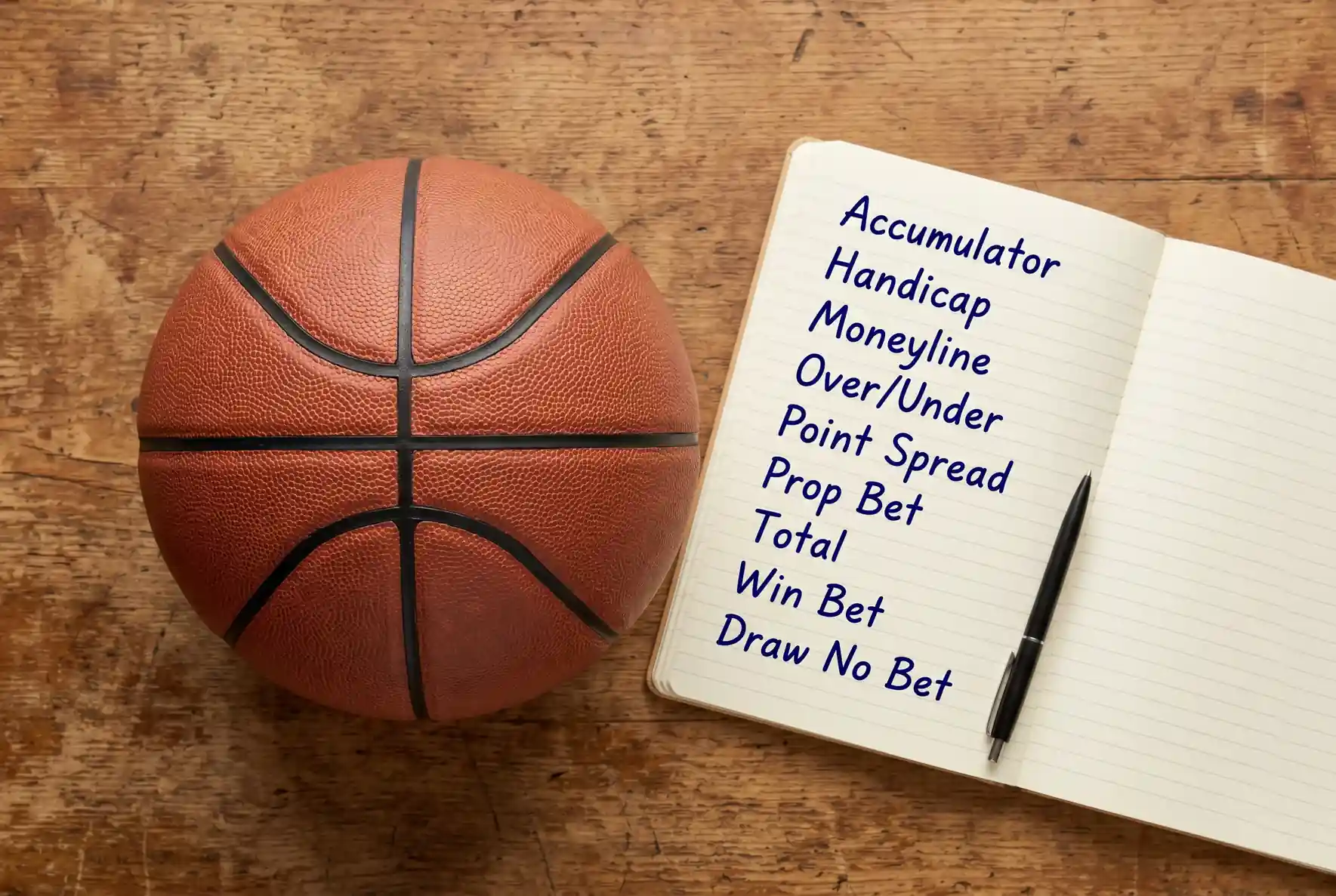
When I started betting on basketball, the terminology nearly put me off before I placed my first wager. I knew what a moneyline was from football. Then someone in a forum mentioned “the vig on the over,” and I spent twenty minutes Googling before realising they were talking about the bookmaker’s margin on a totals bet. Basketball betting borrows vocabulary from American sports culture, UK gambling tradition, and professional trading jargon — sometimes all in the same sentence.
This glossary covers every term you will encounter when betting on basketball at UK platforms, from the basics that newcomers need to the technical language that sharps use among themselves. I have organised it not alphabetically — because nobody reads a glossary from A to Z — but by the context in which you will first encounter each term.
Core Market Types: the Language of Your Bet Slip
Last week, a reader messaged me asking what the difference was between a “spread” and a “handicap” on his betting app. The answer is: nothing. They are the same product wearing different labels, depending on which side of the Atlantic the operator’s terminology leans.
The moneyline is the simplest bet in basketball: pick the team that wins the game. No margin, no adjustment, just the winner. At UK bookmakers, moneyline odds are displayed in decimal (e.g. 1.55) or fractional (e.g. 11/20) format. The team with the lower decimal number is the favourite; the team with the higher number is the underdog. A moneyline bet on the underdog pays more because the implied probability of them winning is lower.
The spread — also called point spread, handicap, or line — adds or subtracts points from a team’s final score for betting purposes. If the Celtics are -6.5, they must win by seven or more for a spread bet on them to pay. If the Pistons are +6.5, they can lose by six or fewer (or win outright) for the spread bet on them to win. The half-point eliminates pushes — dead heats where the result lands exactly on the number.
The total — also called over/under — sets a combined scoring number for both teams. You bet on whether the actual combined score will be over or under that number. NBA totals typically range from 208 to 238 depending on the matchup. The vig (short for vigorish, also called juice or margin) is the bookmaker’s built-in commission on the odds, which ensures they profit regardless of the outcome. On a standard spread or total bet, both sides are priced around 1.90-1.91 rather than 2.00, and that gap is the vig.
Odds Terminology: Decimal, Fractional and American Formats
I once watched a UK bettor misread American odds of -110 as meaning the team was expected to lose by 110 points. The formats are genuinely confusing if you have not been taught the distinctions, and switching between them mid-analysis is a recipe for errors.
Decimal odds are the standard at most UK platforms for basketball. The number represents your total return per pound staked, including the original stake. Odds of 2.50 return two pounds fifty on a one-pound bet — that is one pound fifty profit plus your stake back. To calculate implied probability from decimal odds: divide one by the decimal number. Odds of 2.00 imply a 50% chance; odds of 1.50 imply 66.7%.
Fractional odds — the traditional UK format — express profit relative to stake. Odds of 3/1 mean three pounds profit for every one staked. Odds of 1/2 mean fifty pence profit per pound. The total return is stake plus profit. Fractional odds are less common in basketball sections of UK platforms but appear in promotional materials and some older interfaces.
American odds appear in US-focused analysis and podcasts that UK basketball bettors frequently consume. Positive numbers (+150) indicate profit on a hundred-unit stake: +150 means 150 pounds profit per 100 staked. Negative numbers (-200) indicate how much you must stake to profit 100: -200 means you stake 200 to win 100. Converting to decimal: positive American odds divided by 100, plus 1; negative American odds, divide 100 by the absolute value, plus 1.
The overround (also called the book percentage) is the sum of implied probabilities across all outcomes in a market. In a perfectly fair market, it equals 100%. In practice, it exceeds 100%, and that excess is the bookmaker’s theoretical margin. An NBA moneyline showing 104.5% overround means the bookmaker’s edge is approximately 4.5%. Lower overrounds mean better value for the bettor; higher overrounds mean worse value.
Prop Bets, Parlays and Advanced Market Vocabulary
The global sports betting industry reached $124.88 billion in 2026, and a significant portion of that growth has been driven by the proliferation of prop bets and parlay products that did not exist a decade ago. Knowing the vocabulary is the first step to evaluating whether these products offer genuine value.
A prop (short for proposition) bet is any wager that does not directly relate to the final game outcome. Player props are the most common in basketball: Jayson Tatum over/under 27.5 points, LeBron James over/under 7.5 assists. Game props include first team to score, highest-scoring quarter, and winning margin band. Props are typically higher-margin products than spreads or totals, because the markets attract less sharp money and the bookmaker’s models are less precisely calibrated.
An accumulator (acca) in UK terminology — or parlay in American vocabulary — combines multiple selections into a single bet. All legs must win for the bet to pay. The odds are multiplied together, creating potentially large returns but with correspondingly lower probability. A same-game parlay (SGP) or bet builder combines selections from within a single game, and the correlation between legs means the bookmaker applies an additional margin adjustment. The effective overround on a five-leg SGP can exceed 25%.
Futures are long-term bets on outcomes decided over a season: NBA Championship winner, MVP, Conference winner, regular-season win totals. Futures lock up your capital for months but often offer the best value early in the season, before the market has fully priced in roster changes, injuries, and emerging narratives. Each-way betting on futures — common at UK platforms — pays a fraction of the odds for finishing in a specified position range (e.g. top three in the MVP vote).
Sharp, Square and the Language of Market Dynamics
I hear “sharp money” referenced in betting discussions more than almost any other term, and most people using it do not fully understand what it means. The distinction matters because it shapes how lines move and where value sits.
A sharp is a professional bettor who uses quantitative models, proprietary data, and disciplined bankroll management to generate a long-term positive return. Sharps typically bet early in the trading window, in large amounts, and on lines that they believe are mispriced. Their activity moves lines. A square (also called the public or recreational bettor) bets based on team loyalty, recent form, television coverage, or gut feeling. Squares typically bet closer to game time, in smaller amounts, and on popular teams and overs.
Handle is the total amount wagered on a market or event. Hold is the percentage of handle the bookmaker retains as profit after paying out winners. A market with high handle and low hold is efficient and competitively priced; a market with low handle and high hold is one where the bookmaker is charging a premium for the privilege of access. NBA moneylines have low holds; exotic props have high holds.
Steam is a rapid, sharp-driven line movement that cascades across multiple platforms within minutes. Closing line value (CLV) is the difference between the odds at which you placed your bet and the odds at the moment the market closes (tip-off). Consistently beating the closing line — placing bets at better odds than where the market settles — is the single best indicator of long-term betting skill. For a deeper exploration of how odds formats interact with real NBA betting decisions, the totals strategy guide walks through implied probability calculation in a practical context.
Responsible Gambling Terminology Every UK Bettor Should Recognise
The UK gambling industry generated total GGY of 16.8 billion pounds in the year to March 2025, and the regulatory framework surrounding that industry has developed its own vocabulary that directly affects your betting experience.
GamStop is the UK’s free self-exclusion service. Registering with GamStop blocks your access to all UKGC-licensed gambling sites for a chosen period (six months, one year, or five years). It is a powerful tool for anyone who recognises that their gambling has become problematic, and it cannot be reversed during the exclusion period.
Deposit limits, session limits, and loss limits are operator-side tools that cap how much you can deposit, how long you can be logged in, or how much you can lose within a defined period. Reality checks are periodic pop-up notifications that tell you how long you have been betting and how much you have deposited or lost. All UKGC-licensed operators must offer these tools, though their prominence in the interface varies.
The statutory levy — 1.1% of GGY for online operators since April 2025 — funds research, prevention, and treatment of gambling harm. RGD (Remote Gaming Duty) is the tax operators pay on online gambling revenue, rising to 40% from April 2026. Neither the levy nor RGD creates a direct cost for bettors, but both affect the pricing environment indirectly by squeezing operator margins. Knowing these terms helps you understand why odds and promotions may become slightly less generous over time — and why disciplined value-hunting becomes more important as the regulatory environment tightens.
What is the vig in basketball betting?
The vig (short for vigorish, also called juice or margin) is the bookmaker’s commission built into the odds. On a standard NBA spread or total bet, both sides are priced at around 1.90-1.91 instead of a fair 2.00. That gap ensures the bookmaker profits over time regardless of individual game results.
What does CLV mean in basketball betting?
CLV stands for closing line value — the difference between the odds you secured when placing your bet and the odds at game time. Consistently getting better odds than the closing line is the strongest indicator of long-term betting skill, because the closing line represents the most efficient version of the market.
Created by the ”Basketball Betting Markets” editorial team.