Basketball Betting Cash Out UK: How It Works and When to Use It
 Available in US
The cash-out decision that taught me the most was one I got wrong. Third quarter of a 2022 Bucks-Nets playoff game, my pre-game moneyline bet on Milwaukee was sitting at a sixty-pound profit with a cash-out offer on screen. The Bucks led by fourteen. I held, thinking the lead was safe. Brooklyn went on a 22-4 run in the fourth quarter and won by three. My sixty-pound profit turned into a total loss because I treated cash-out as a sign of weakness instead of a risk management tool.
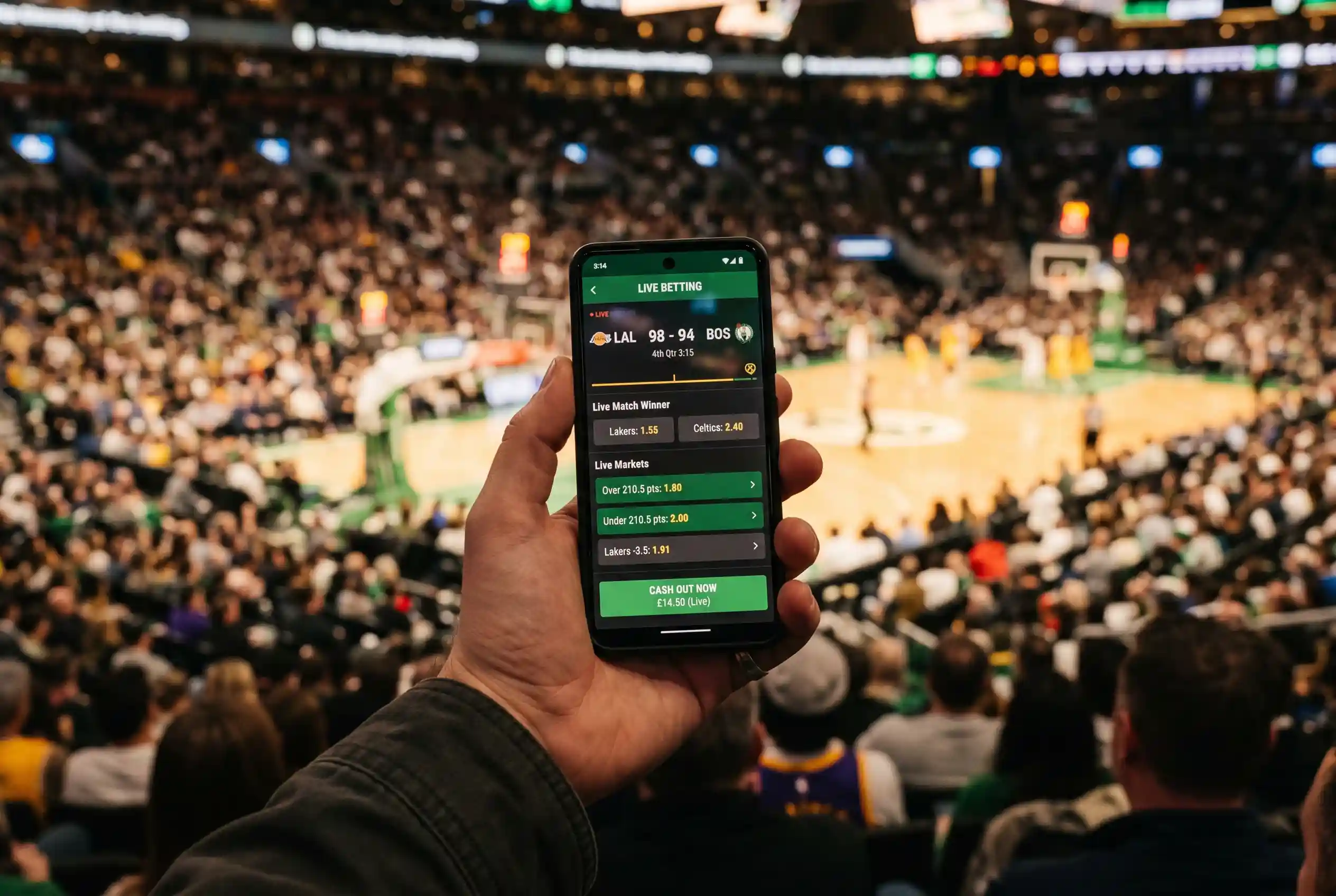
Cash-out is the feature that generates more emotional decisions than any other product in basketball betting. It lets you settle a bet before the final whistle, locking in a profit or cutting a loss based on the current state of play. Around 80% of UK online gamblers bet through smartphones, and the cash-out button sits right there on the screen, updating every few seconds during a live NBA game, practically begging you to tap it. Understanding when that tap is rational and when it is emotional is the difference between using cash-out as a strategy and using it as a slot machine.
How Cash-Out Works on Basketball Bets
When you place a bet and the game begins, the bookmaker continuously recalculates the fair value of your position based on the current score, time remaining, and live odds. The cash-out offer is that recalculated value minus a margin — the operator’s fee for providing the early-settlement service. If you placed a ten-pound bet at 2.50 on the Celtics moneyline and they lead by eight at half-time, the live odds on the Celtics might have shortened to 1.30. Your bet is now “worth” more than you paid for it, and the cash-out offer reflects that — minus the operator’s cut.
The margin on cash-out offers varies between operators but typically sits between 3% and 8% of the theoretical fair value. That margin is the cost of convenience. If you could sell your bet on an exchange at the current live price, you would receive the full theoretical value minus commission. Cash-out at a traditional bookmaker gives you less, but it is instant, requires no exchange account, and works on bet types (props, accumulators, same-game parlays) that exchanges do not cover.
Cash-out availability depends on the bet type, the operator, and the game status. Most UK platforms offer cash-out on pre-game moneyline, spread, and total bets throughout the game. Some extend it to accumulators and same-game parlays. A few offer cash-out on player props, though this is less common. Cash-out may be temporarily suspended during fast-moving moments — a contested possession, a review, or a timeout — because the operator cannot accurately reprice during those intervals.
Partial Cash-Out and Auto Cash-Out Features
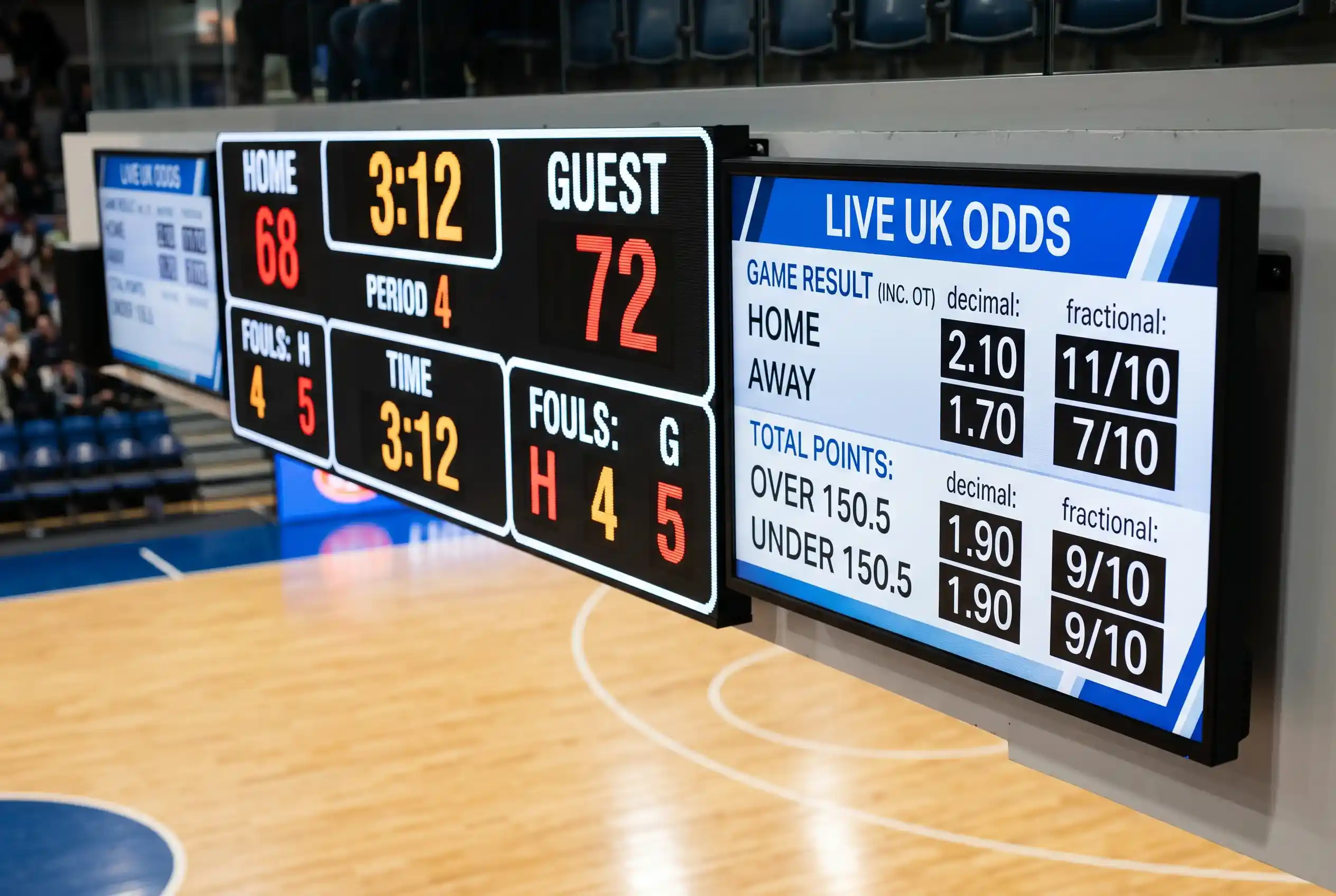
Live betting now accounts for over 62% of the online sports betting market globally, and the demand for flexible settlement options within that live environment has driven operators to develop partial and auto cash-out features that go beyond the simple all-or-nothing button.
Partial cash-out lets you settle a portion of your bet while leaving the rest active. If your cash-out offer is forty pounds, you might take twenty and leave the other half running. This is particularly useful in basketball, where momentum swings can reverse a comfortable lead in a single quarter. Taking partial profit at half-time while leaving exposure to the second half is a risk management approach I use frequently — it guarantees a minimum return while preserving upside if the game continues in your favour.
Auto cash-out sets a target value that triggers settlement automatically when reached. You specify the profit level you want — say, fifty pounds — and the system executes the cash-out the moment the offer hits that threshold, without requiring you to be watching the game. For late-night NBA games where you might fall asleep before the fourth quarter, auto cash-out is invaluable. Set the target before you go to bed, and the system manages the exit for you.
Not every UK platform offers both features. Partial cash-out is available at most major operators; auto cash-out is less universally supported. If these tools are important to your basketball betting workflow, verify availability before committing to a primary platform.
When Cashing Out Makes Strategic Sense in Basketball
I use cash-out in three specific scenarios, and I resist it in all others. The discipline is in the boundaries, not in the tool itself.
The first scenario is a changed thesis. If I backed the over on a game total because both teams play at high pace, and the first half produces heavy fouling and a pace ten per cent below the season average, my original thesis is wrong. The game is structurally different from what I predicted. Cashing out at a loss — or a reduced profit — is not emotional; it is acknowledging that the conditions have changed and my position no longer has an edge. Holding a bet whose thesis has collapsed is the sunk-cost fallacy in action.
The second scenario is hedging a large exposure. If I have a four-leg accumulator where three legs have won and the final leg is an NBA game tipping off at 01:30, the cash-out offer might represent a guaranteed profit of, say, two hundred pounds versus a potential payout of five hundred if the last leg wins. Whether to cash out depends on my confidence in the final leg and the ratio between the guaranteed and potential amounts. If my model gives the final leg a 55% chance of winning, the expected value of holding is 275 pounds (0.55 x 500) versus the guaranteed 200. Holding is correct. If my model gives it 35%, the expected value of holding is 175 — below the cash-out offer — and cashing out is the better mathematical decision.
The third scenario is bankroll protection at the end of a losing streak. If my bankroll is down significantly and a cash-out offer locks in a profit that stabilises my position, the psychological and financial value of securing that profit may outweigh the expected value of holding. This is a concession to human psychology rather than pure maths, and I make it rarely — but I make it, because protecting your ability to continue betting is more important than maximising the expected value of any single bet.
The Hidden Cost: How Bookmakers Price Cash-Out Offers
Every cash-out offer is, from the bookmaker’s perspective, a new bet. They are offering to buy back your position at a price that guarantees them a margin. The calculation uses the current live odds, adjusted for the operator’s cash-out margin. If the fair value of your position is fifty pounds and the operator applies a 5% cash-out margin, your offer is 47.50. That two-fifty is the cost of early settlement.
The margin is not fixed across all situations. Operators typically widen the cash-out margin in volatile game states — when the score is close, when a key player has fouled out, or when the game is in the final two minutes and the outcome is genuinely uncertain. These are precisely the moments when bettors most want to cash out, which means the cost of doing so is highest when the desire is strongest. Recognising that dynamic is essential. The cash-out button flashing green during a tense fourth quarter is not a gift — it is a product priced to benefit the operator in the moments when you are most likely to act impulsively.
I mitigate this by making cash-out decisions before the pressure point arrives. During my pre-game analysis, I identify the conditions under which I would cash out (thesis change, specific score threshold, specific time remaining) and write them down. When the moment arrives, I check my pre-written criteria rather than reacting to the emotions of the live game. The betting apps guide covers which UK platforms offer the most transparent cash-out interfaces and which bury the feature behind layers of navigation.
Cash-Out and Accumulators: the Specific Basketball Challenge
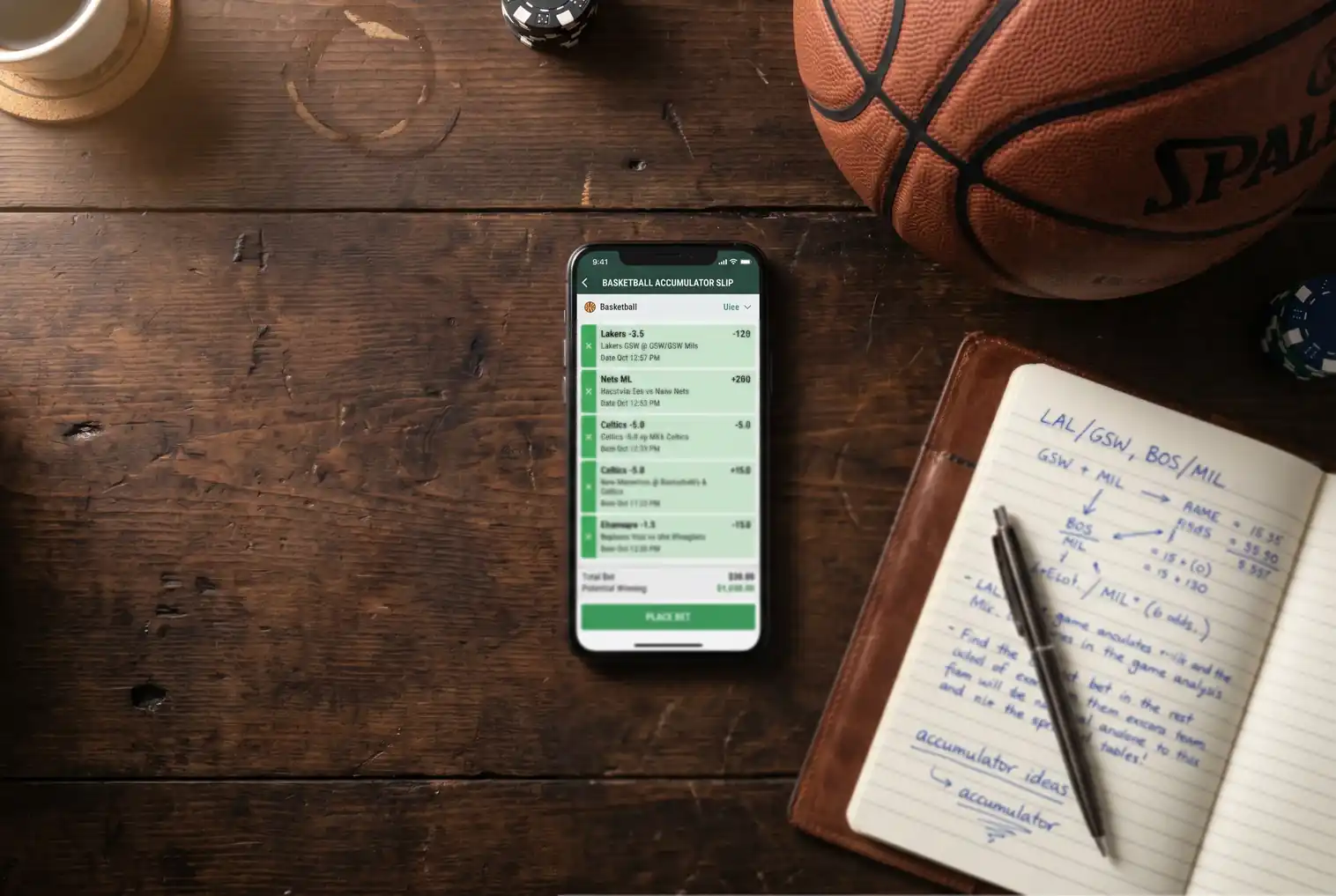
Accumulators amplify both the temptation and the complexity of cash-out decisions. A five-leg NBA accumulator with three legs settled and two pending might show a cash-out offer that swings by fifty pounds between possessions. The variance is extreme because the payout multiplier on accumulators magnifies every price movement in the underlying markets.
My approach to accumulator cash-out is simple: I decide before placing the bet at what point I will consider cashing out, and I set that threshold as a percentage of the maximum potential payout. If the cash-out offer reaches 60% of the maximum, I take it — regardless of how “close” the remaining legs look. The reasoning is mathematical: at 60% of maximum, the remaining legs need to both win for the hold to outperform the cash-out, and the combined probability of two independent legs both winning is lower than most bettors intuitively estimate.
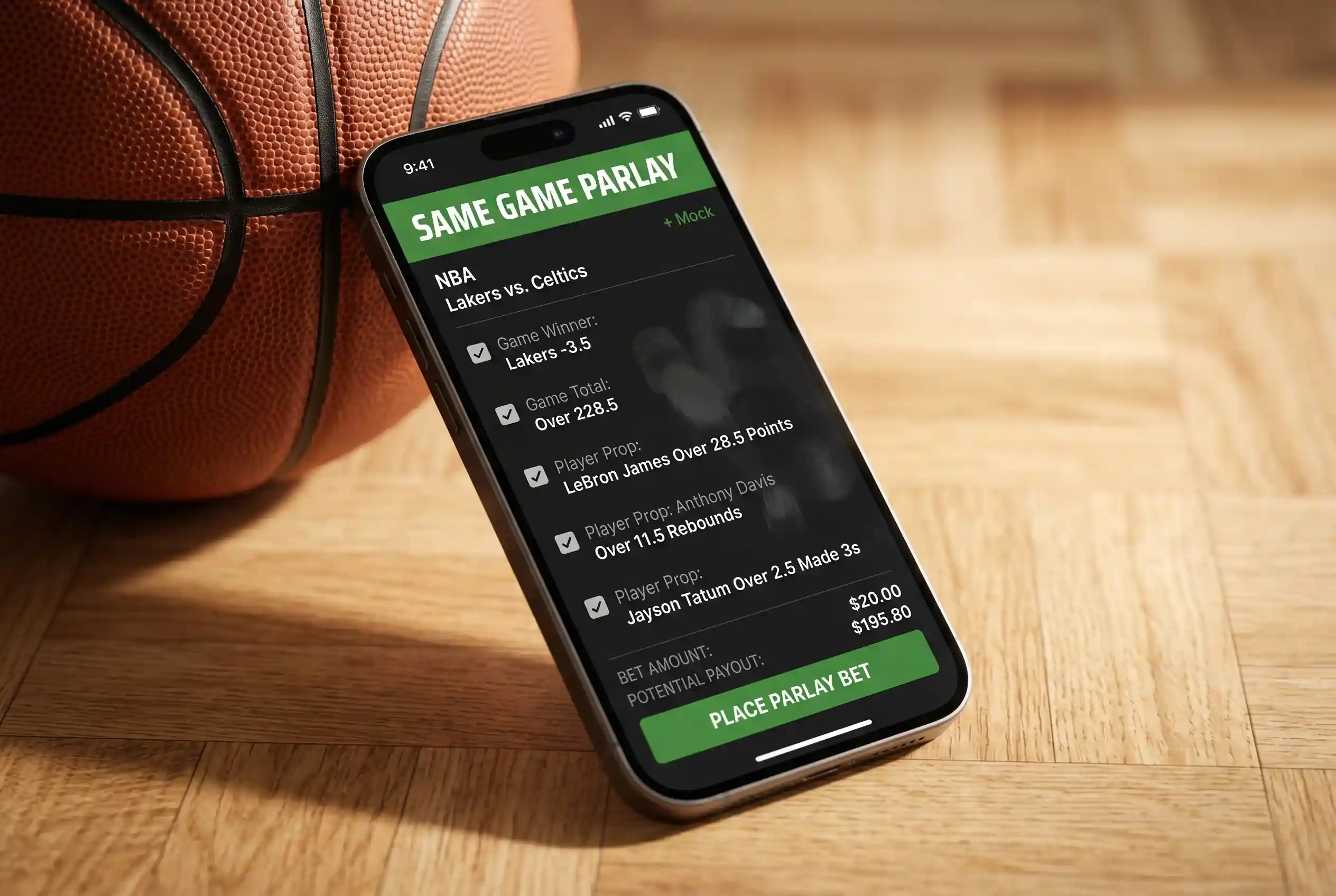
For same-game parlays, cash-out is available at some UK platforms but the pricing is even less transparent than for standard accumulators, because the correlation model that priced the original bet also affects the cash-out valuation. If you use SGPs regularly, track the cash-out offers relative to the theoretical values and you will develop a sense for which operators price their SGP cash-outs more or less aggressively. Over a season, that knowledge compounds into better exit decisions.
Can I cash out a basketball accumulator if one leg has already lost?
No. If any leg of an accumulator has lost, the entire bet is settled as a loss and cash-out is no longer available. Cash-out on accumulators is only active while all settled legs have won and at least one leg is still pending.
Why does the cash-out value sometimes drop even when my team is winning?
Cash-out values reflect the current live odds, which account for score, time remaining, and momentum. If your team is winning but the opponent has just gone on a run, the live odds lengthen (the market becomes less certain your team will hold on), reducing the cash-out value. The relationship between score and cash-out value is not linear — context matters as much as the scoreboard.
Prepared by the Basketball Betting Markets editorial staff.