Beginner Basketball Betting Account Guide
 Available in US
I placed my first basketball bet in 2018 on a random NBA Tuesday night game, picked the Lakers moneyline because I liked the jersey, and lost twelve quid before the second quarter even started. Eight years later, I make a living analysing these markets — and I still remember that feeling of staring at a bet slip without the faintest idea what half the numbers meant. This guide exists so you skip that phase entirely.
Basketball betting in the UK is growing fast but remains misunderstood by anyone raised on football accumulators and horse racing each-ways. The mechanics are different, the pace is relentless, and the vocabulary borrows heavily from American sportsbook culture. None of that should put you off. Once you understand how the pieces fit together, basketball becomes one of the most rewarding sports to wager on — high-scoring, data-rich, and packed with markets you will not find in football.
There are currently 5,825 licensed betting premises across Britain, and every major online operator holds a UK Gambling Commission licence that permits basketball markets. The infrastructure is there. What you need is the knowledge to use it properly, and that starts here.
Setting Up a Verified Account With a UK-Licensed Betting Operator
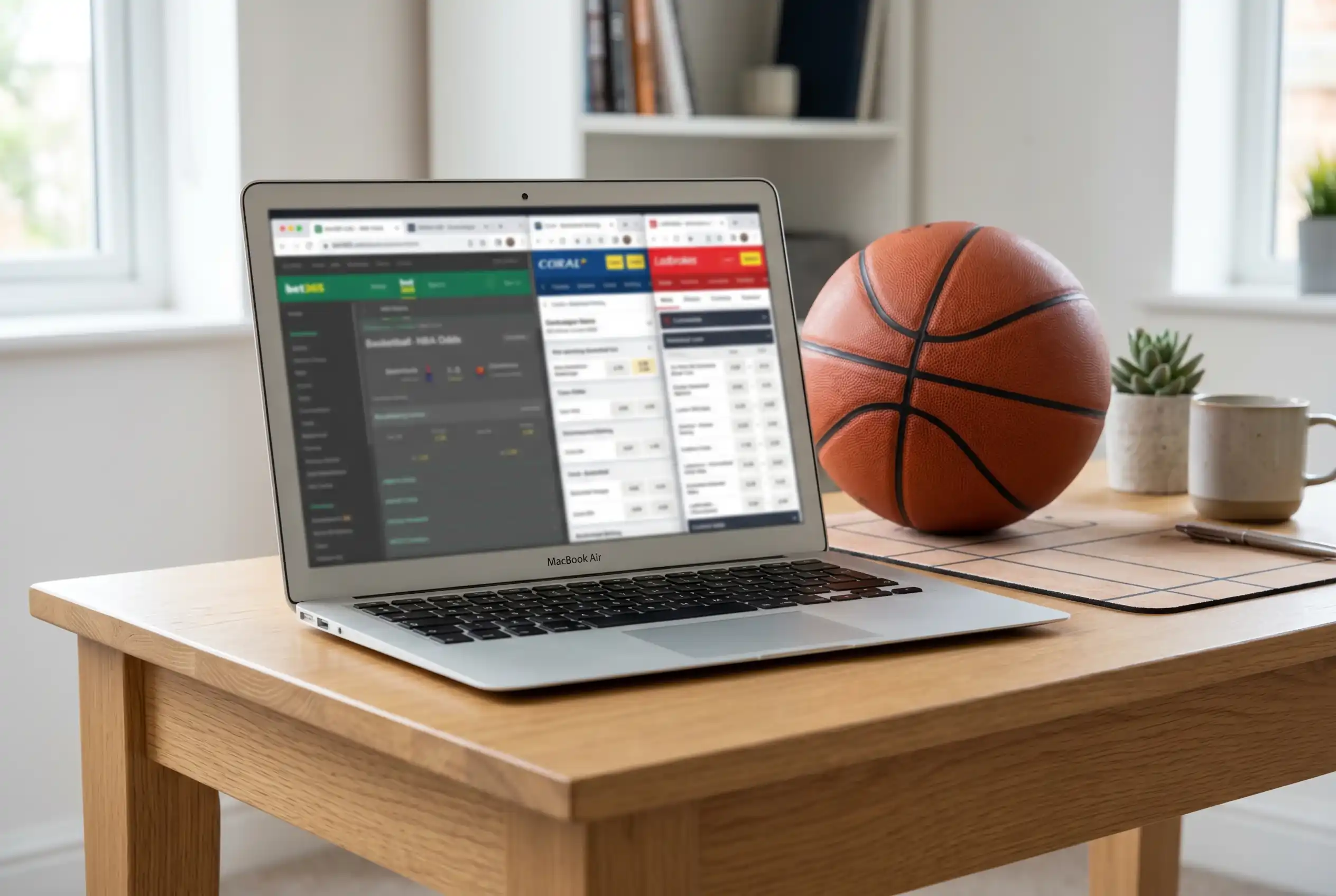
A mate once told me he spent forty minutes trying to register with an offshore site because someone on Reddit said the NBA odds were better. They were — until he tried to withdraw and discovered the operator had no UKGC licence, no obligation to protect his funds, and customer support that replied in broken English three days later. Save yourself the headache: stick with UK-licensed platforms from day one.
Every legitimate UK betting site must hold a licence issued by the UK Gambling Commission under the Gambling Act 2005. This is not bureaucratic trivia — it means your deposits sit in segregated accounts, disputes go through an independent adjudicator, and the operator must offer responsible gambling tools by law. When you land on a registration page, look for the UKGC licence number in the footer. If it is not there, close the tab.
The registration process itself is straightforward. You will need a valid UK address, proof of identity (passport or driving licence), and a payment method linked to your name. Most platforms verify your identity automatically within minutes, though some require a manual document upload before you can place a bet. Do not skip this step or try to use someone else’s details — operators run Know Your Customer checks, and failing them locks your account.
Once verified, deposit using a debit card, PayPal, or bank transfer. Credit card gambling has been banned in the UK since April 2020, so do not bother trying. Set a deposit limit before you fund the account — every UK operator must let you do this, and it is the single most useful habit you can build as a new bettor. I set mine during my first week and have never regretted it.
One more thing: ignore the welcome bonus for now. Free bets and matched deposits come with wagering requirements that confuse beginners and distort early decision-making. Learn the sport first, optimise promotions later.
Placing Your First Basketball Bet: a Walkthrough
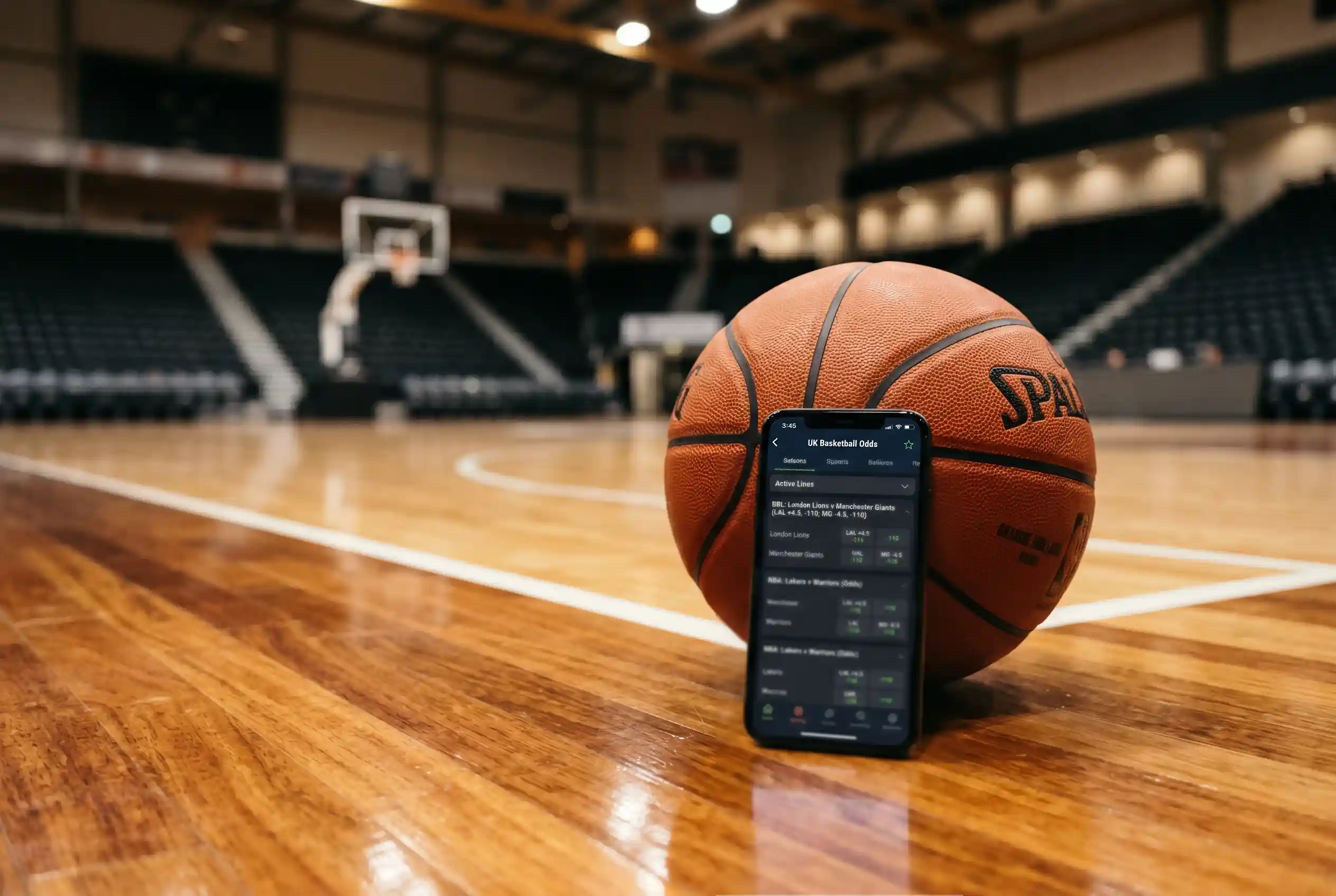
Around 80% of online gamblers in the UK now place bets using a smartphone, and basketball is almost tailor-made for mobile. Games tip off late in the evening UK time — usually between 23:00 and 03:00 for NBA — so you are likely on the sofa with your phone, not sitting at a desktop. Make sure your chosen operator’s app is installed and logged in before tip-off. Scrambling to download an app while the first quarter is already underway is a recipe for rushed decisions.
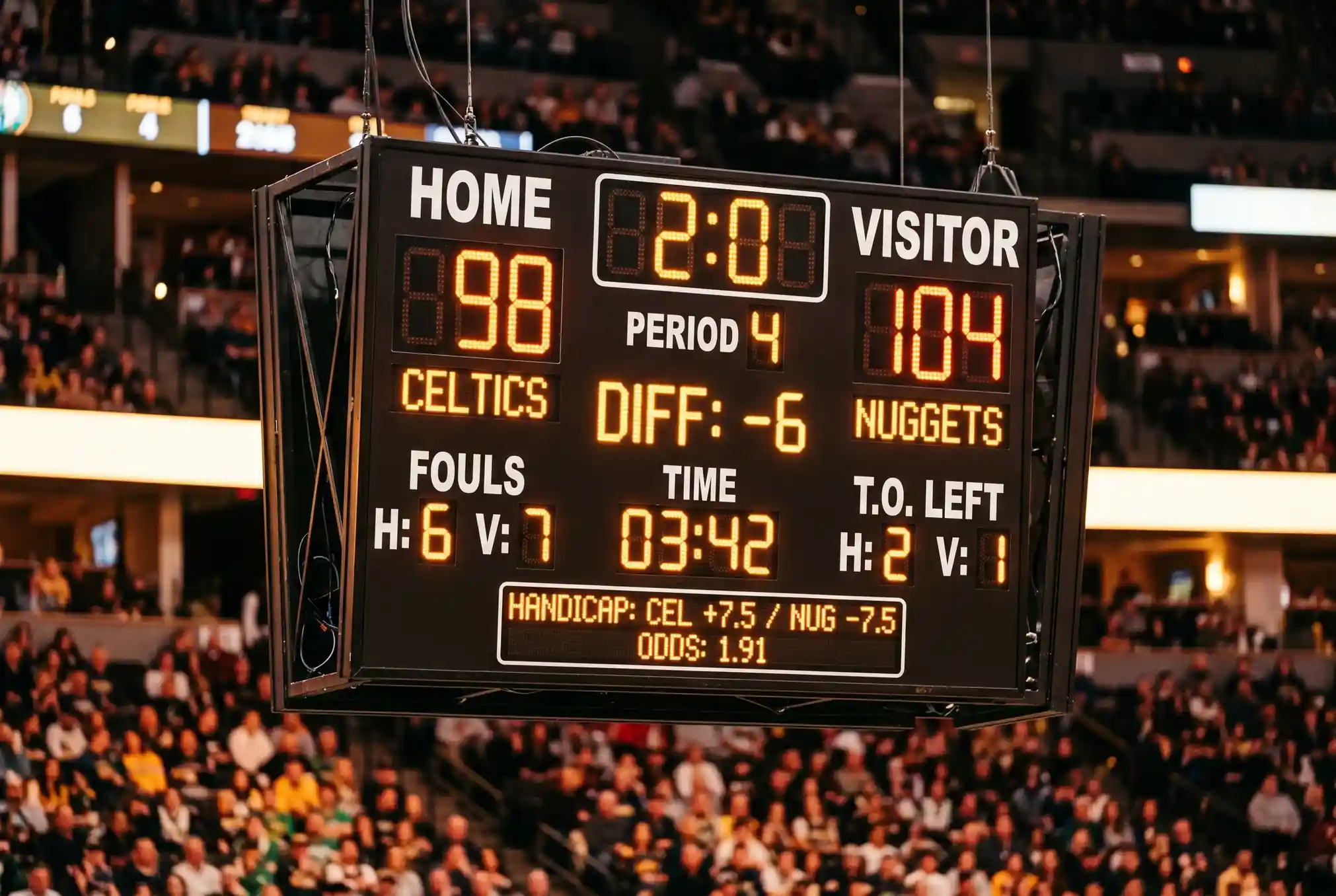
Here is the simplest possible first bet. Open the app, navigate to basketball, find tonight’s NBA fixture list, and pick a game. You will see three core markets immediately: moneyline (who wins), point spread (who wins after an adjustment), and totals (combined score over or under a set number). For your first bet, choose the moneyline — it is the most intuitive. Tap the team you think will win. The selection appears on your bet slip. Enter your stake — start small, genuinely small, like two or three pounds. Confirm.
That is it. You now have a live bet on an NBA game. The result settles automatically after the final buzzer, including overtime. Your account balance updates within minutes. No need to “claim” winnings or navigate settlement screens — the platform handles everything.
I tell every beginner the same thing: your first five bets are tuition fees. Do not expect profit. Use them to learn how the interface works, how quickly odds shift, and how it feels when a game swings in the fourth quarter. The education is worth far more than whatever you stake.
Reading Basketball Odds: Decimal and Fractional Formats
The first time I saw NBA odds on a UK site, they were displayed in decimal format and I instinctively tried to convert them to fractional in my head. It took me embarrassingly long to realise that decimal is actually simpler — your potential return is just your stake multiplied by the decimal number. A 1.50 price on a heavy favourite means a five-pound stake returns seven pounds fifty, including your original fiver. Done.
Fractional odds — the traditional UK format — express profit relative to stake. Odds of 1/2 mean you profit one pound for every two staked. The maths is identical to decimal 1.50, just presented differently. Most UK platforms default to fractional because that is what football and racing punters expect, but you can switch to decimal in your account settings. I would recommend doing so for basketball. The American influence on the sport means most analysis, podcasts, and tipster content uses decimal or American formats, and reading decimal natively saves you constant mental gymnastics.
Behind every set of odds sits an implied probability — the bookmaker’s estimate of how likely an outcome is, plus their margin. Decimal odds of 2.00 imply a 50% chance. Odds of 1.25 imply 80%. Learning to convert odds into probabilities lets you spot when a bookmaker’s price disagrees with your own assessment. That gap is where long-term value lives, and it is the foundation of everything I do professionally. For now, just get comfortable reading the numbers. The point spread layer adds complexity, but moneyline and totals odds follow the same decimal logic.
Five Mistakes New Basketball Bettors Make
I have watched hundreds of newcomers enter basketball betting over the years, and the same errors surface so reliably that I could set odds on them. Here are the five I see most often — and the fixes that actually work.
First: betting every game. The NBA regular season runs 82 games per team, October to April, with multiple fixtures every night. New bettors treat this like an all-you-can-eat buffet and place ten, fifteen, twenty bets a week. Volume kills bankrolls. I rarely bet more than three or four NBA games in a week, and some weeks I bet none. Selectivity is a skill, not a limitation.
Second: ignoring time zones. NBA tip-offs start late in the UK, and fatigue degrades judgement. Placing a live bet at 02:00 after three hours of watching is not the same as making a clear-headed pre-game selection at 20:00. If you cannot stay sharp, stick to pre-game markets and check results in the morning.
Third: chasing losses during a game. Basketball’s scoring pace creates the illusion that a deficit can always be erased. A team down fifteen points in the third quarter does sometimes come back — but the odds already reflect that possibility. Doubling down on a live moneyline because you “feel” a run coming is emotional betting, not analytical betting.
Fourth: treating accumulators as a default. Multi-leg bets are exciting, but each added selection compounds the bookmaker’s margin against you. Sarah Harrison, former CEO of the UK Gambling Commission, once urged operators to apply the same innovation used for profitability toward customer protection — and accumulators are the product where that tension is most visible. Start with singles. Build an accumulator only when you have a genuine analytical reason to combine selections, not because the potential payout looks impressive.
Fifth: skipping responsible gambling tools. Every UK platform offers deposit limits, loss limits, reality checks, and cooling-off periods. Using them is not a sign of weakness — it is the mark of someone who plans to be betting next season too, not just this week.
Your First Week as a Basketball Bettor
After eight years in this space, the single best piece of advice I can give a beginner is to slow down. Watch two or three full NBA games before placing a single bet. Get a feel for how momentum shifts, how timeouts change rhythm, how a star player sitting out the fourth quarter of a blowout alters everything. Basketball rewards people who pay attention to the game itself, not just the odds screen.
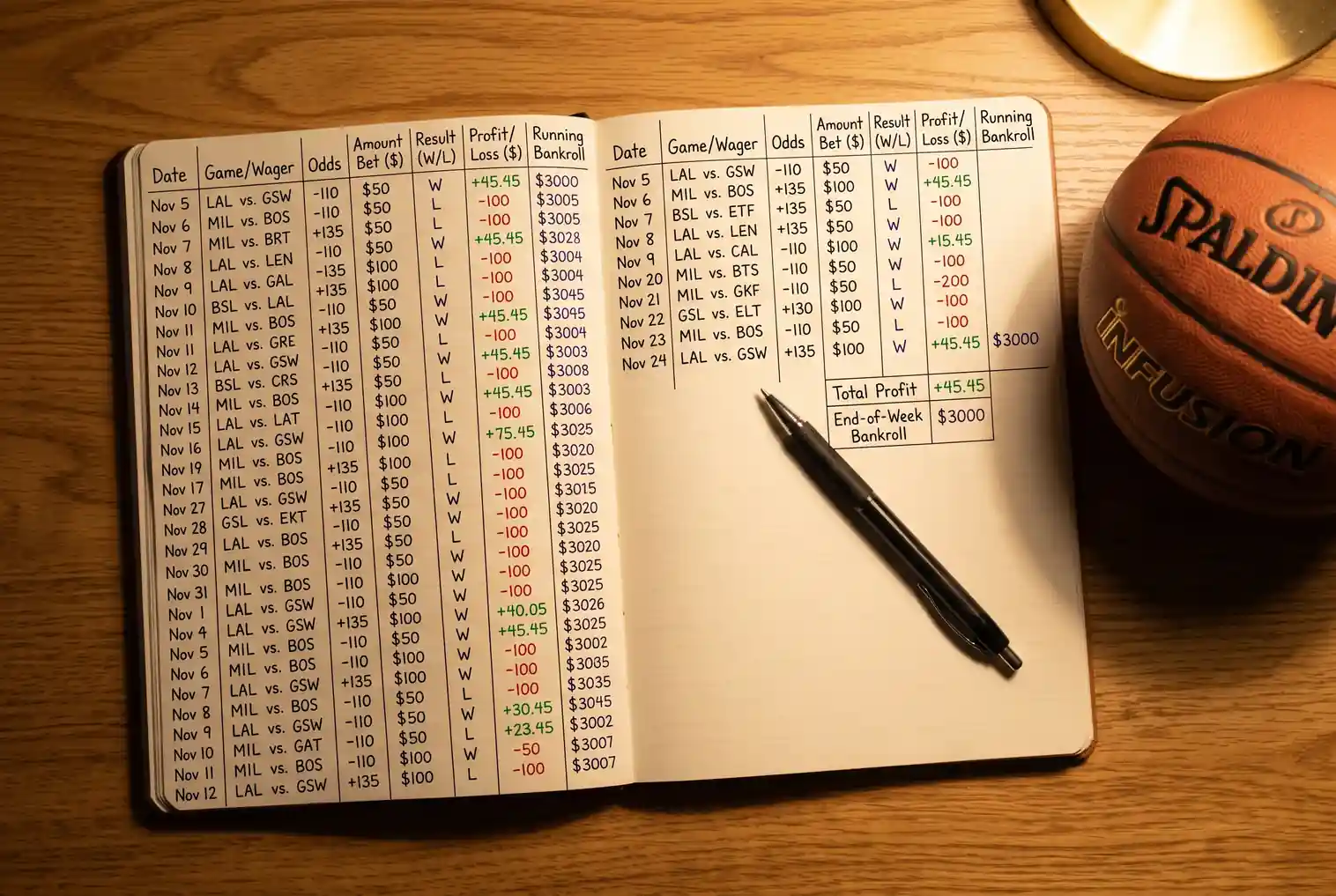
During that first week, set up your account, deposit a small amount you are genuinely comfortable losing, place a few moneyline bets, and track the results in a simple spreadsheet — date, game, market, stake, odds, outcome. That spreadsheet is the beginning of discipline, and discipline is what separates recreational punters from serious bettors. I still update mine every morning.
How much money do I need to start betting on basketball in the UK?
Most UK operators accept minimum stakes of one or two pounds. Starting with a bankroll of twenty to fifty pounds is enough to learn the basics without financial pressure. The goal in your first month is education, not profit.
Is it better to use decimal or fractional odds for basketball?
Decimal odds are simpler for basketball because they show total return in one number — just multiply by your stake. Most basketball analysis content worldwide uses decimal or American formats, so reading decimal natively saves constant conversion.
Written by the editors at Basketball Betting Markets.