Live Basketball Quarter Betting Systems
 Available in US
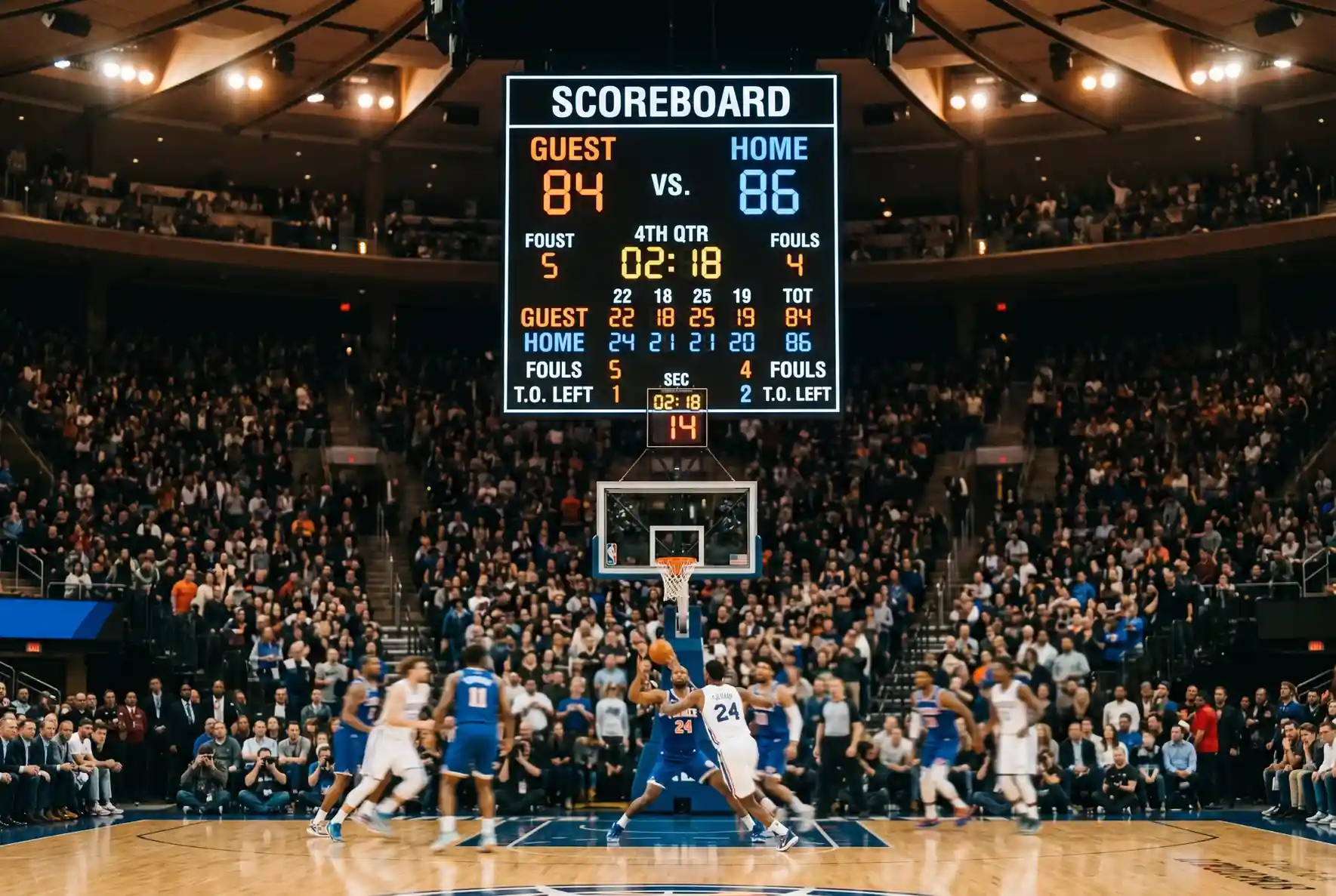
I discovered quarter betting by accident. In my second year of analysing NBA markets, I noticed a pattern in my notes: teams that dominated third quarters consistently posted stronger overall records, but the game-level markets rarely reflected that quarter-specific edge. When I started isolating quarters as standalone bets, my hit rate improved by nearly eight percentage points over a two-month sample. The sample was small, but the lesson was permanent — basketball is not one 48-minute event; it is four distinct twelve-minute contests, each with its own dynamics.
Quarter betting remains one of the least crowded corners of basketball wagering in the UK. Most punters default to full-game moneyline or spread, leaving per-period markets with wider margins but also less efficient pricing. Live betting accounts for over 62% of the global online sports betting market, and quarter bets sit at the intersection of live and pre-game — you can take positions before the game starts or adjust quarter by quarter as the match unfolds.
Live Quarter Spreads, Totals, and Race-to-Points Betting Markets
Walk into any UK operator’s NBA page and you will find quarter-specific markets listed beneath the main game lines. The three you will encounter most often are quarter spread, quarter totals, and race-to-points. Each works like its full-game equivalent but is confined to twelve minutes of play.
Quarter spreads are tighter than full-game spreads, typically ranging from -1.5 to -3.5 for the favourite. That narrow range makes pushes more common and half-point differences more meaningful. If you are used to seeing a team favoured by -7.5 for the full game, the first quarter spread might be -2.5 — not simply one-quarter of the full-game number, because early-game dynamics (starters playing full minutes, fresh legs, scripted opening plays) create their own patterns.
Quarter totals work the same way as game totals, but the numbers sit around 52 to 58 depending on the matchup. First-quarter totals tend to be slightly lower than the average of all four quarters because defences are fresh and coaches have had time to scout and prepare specific opening schemes. Fourth-quarter totals are more variable because blowouts lead to bench players logging extended minutes, which can inflate or deflate scoring unpredictably.
Race-to-points markets — which team reaches 10, 15, or 20 points first — are pure in-play products. They reset each quarter and offer fast-settling action. The in-play betting strategy guide covers these in more detail, but the core principle is straightforward: the team with faster pace and better transition offence holds a structural advantage in race markets.
First Quarter Betting: Why Opening Minutes Attract Sharp Money
Professional bettors — “sharps” in industry jargon — disproportionately target first-quarter markets. The reason is information efficiency. Full-game lines are the most analysed, most liquid, and most accurately priced markets on the board. First-quarter lines receive less attention from the betting public, which means the bookmaker’s opening price is more likely to contain an exploitable gap.
I focus on two first-quarter angles. The first is starter impact. NBA teams roll out their best five players to open the game, and those starters usually play the entire twelve minutes of the first quarter. If a team’s starting lineup has a significantly higher net rating than the opposing starters, that edge concentrates in Q1 before rotation players enter the mix in the second quarter. The data here is publicly available on any NBA stats site — filter by lineup combinations and minutes played in the first quarter.
The second angle is scripted offence. Coaches design specific plays for the opening possessions of a game, and those plays tend to produce higher offensive efficiency than the improvised actions that emerge as the game settles into its flow. Teams with elite coaching staffs — the kind that generate a first-quarter offensive rating three or four points above their season average — are the ones I target for Q1 spread bets.
One caveat: first-quarter markets are also the most susceptible to false signals from small-sample noise. A team might go on a 10-0 run to start the game for reasons that have nothing to do with structural advantage — a couple of lucky bounces, an opponent missing open shots. Discipline means committing to your pre-game analysis and not chasing the scoreboard in the opening minutes.
The Third Quarter Phenomenon in NBA Games
If first quarters attract sharp money, third quarters are where recreational bettors get burned. There is a well-documented pattern in NBA data: teams that trail at half-time frequently outperform expectations in the third quarter. The half-time interval gives coaches fifteen minutes to make adjustments, and the team that was losing has stronger motivation to execute those adjustments immediately. This creates a regression effect in third-quarter spreads that bookmakers do not always price accurately.
Real-time data integration — the kind of live feeds that have increased the average number of bets per session by 35 to 45% across the industry — makes third-quarter betting feel immediate and exciting. But excitement is not an edge. The edge is in the data: teams with elite half-time adjustment records (measured by third-quarter net rating minus first-half net rating) overperform their third-quarter spread at a rate that has been consistent for three consecutive seasons in my tracking.
The flip side is also true. Teams that dominate the first half often ease off in the third quarter, either from complacency or because the coach shortens the rotation to rest starters for the fourth quarter. A team leading by twenty at half-time might lose the third quarter by six or seven points without the game ever being genuinely competitive. If you took the pre-game full-game spread at -8.5, you are still winning. But if you take a third-quarter spread on the favourite in that same game, you are fighting against a structural regression pattern.
Stacking Quarter Bets: a Risk Framework
Quarter stacking — placing bets on multiple quarters within the same game — is tempting because it lets you express a detailed thesis about how a game will unfold. “The Celtics will dominate Q1, lose ground in Q2, recapture the third, and coast in the fourth” — that narrative maps neatly onto four separate bets. The problem is that each quarter bet is a separate wager with its own margin, and stacking four of them compounds the bookmaker’s edge exactly like a four-leg accumulator.
I use quarter stacking sparingly and only when my full-game analysis points to a specific quarter as the inflection point. If I believe a game’s total will go over, and the reason is that both teams play at breakneck pace but start slowly due to conservative opening scripts, then a Q2 or Q3 over bet might offer better value than the full-game total. That is a targeted position, not a scattergun approach to covering every period.
Risk management for quarter bets follows the same principles as any other basketball wager: flat stakes, a maximum of 2-3% of your bankroll per bet, and rigorous tracking. The variance on twelve-minute markets is higher than on 48-minute markets — a single turnover or foul call swings the outcome more in a quarter than across the full game — so your hit rate will fluctuate more over short periods. Accept that volatility as the cost of entry, and evaluate results over a minimum of fifty bets before drawing conclusions.
The quarter-betting edge is real, but it requires patience, specific data analysis, and the discipline to sit out the quarters where your model has no opinion. Most nights, that means betting one quarter of one game — or none at all.
Are quarter bets settled independently of the final game result?
Yes. Each quarter bet is settled based solely on what happens during that twelve-minute period. A team can lose the first quarter but win the game, and your first-quarter bet on the losing side still pays out as a loss. Overtime does not affect quarter bets.
Which quarter tends to have the most scoring variance in NBA games?
The fourth quarter typically has the highest scoring variance. Blowout games see starters benched early, which suppresses scoring, while close games produce high-intensity possessions and intentional fouling that can inflate totals. The third quarter sits second in variance due to half-time adjustments creating momentum swings.
Created by the ”Basketball Betting Markets” editorial team.